Industrial / manufacturing · Module 2
How time-series reasoning extends from simulation into factory-floor data
For industrial IoT engineers comparing AI claims against the structure of real plant data.
Factory-floor data is often temporal even when the dashboard is static. The signal lives in traces, shifts, event sequences, sensor histories, and relationships across operating modes.
Time-series reasoning asks what changed, when it changed, what preceded it, and whether the same pattern appears across related equipment or processes.
The industrial value comes from narrowing where a human should inspect, not from declaring that a model owns operational decisions.
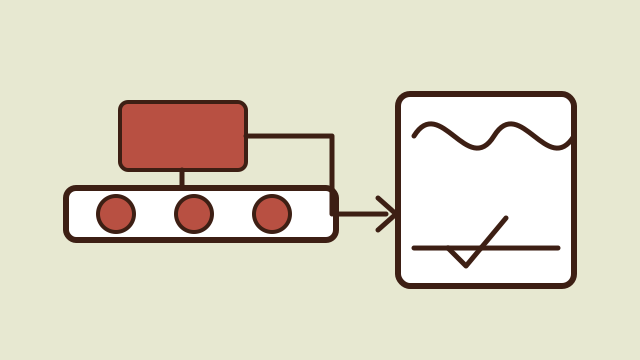
Factory-floor time-series scan
A local toy scan over ordered factory-floor signal values, matching this module’s signal-over-time frame.
const signalValues = [72, 74, 73, 76];
for (const [index, value] of signalValues.entries()) {
  console.log('factory signal point', index, value);
}How time-series reasoning extends from simulation into factory-floor data check
0 of 1 questions completed locally.
Source: docs/runbooks/phase-3-fintech-industrial.md#e031