Probability · Module 5
Conditional probability + Bayes’ rule
The single most important idea in modern AI is updating beliefs in light of evidence.
Conditional probability
P(A | B) reads “the probability of A, given that B has happened.”
Example: P(rain | dark clouds) is much higher than P(rain).
Conditioning on evidence is how all modern AI thinks.
Bayes’ rule
P(A | B) = P(B | A) · P(A) / P(B)
In plain English: your belief in A after seeing B equals your prior belief in A, scaled by how well A explains B.
Total probability
When several paths can produce the same evidence, account for all of them before updating.
Every learning system you will hear about is a Bayes-rule descendant.
Applied frame
Translate the claim into events, probabilities, distributions, and simulation checks before trusting a single answer.
Diagram cue
The diagram separates event space, probability mass, evidence, and update steps.
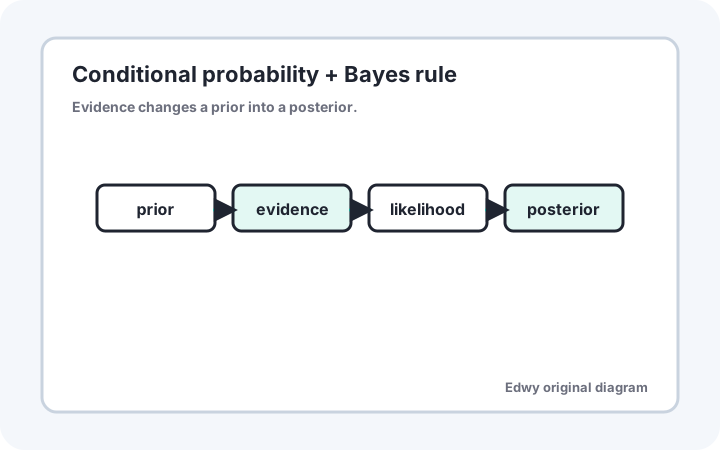
Evidence changes a prior into a posterior. Key motion beats: prior, evidence, likelihood, posterior.
Bayesian update check
0 of 3 questions completed locally.
Source slide 6