Probability · Module 4
Probability — the basics
A probability is a number between 0 and 1 that expresses how strongly we believe something will happen.
Event
A possible outcome ("it rains tomorrow").
Probability P(A)
How likely event A is. P(rain) = 0.3 = 30 %.
Independent events
One doesn’t affect the other. Coin flips.
Distribution
A map from every event to its probability.
Binomial question
When the same yes/no event repeats, a binomial model estimates how often one outcome appears.
normal distribution
Many measured quantities cluster around a middle value, with rarer values farther away.
Monte Carlo simulation
When a formula is awkward, run many random trials in code and inspect the distribution of outcomes.
A simple distribution
Heights show the probability of each outcome.
Applied frame
Translate the claim into events, probabilities, distributions, and simulation checks before trusting a single answer.
Diagram cue
The diagram separates event space, probability mass, evidence, and update steps.
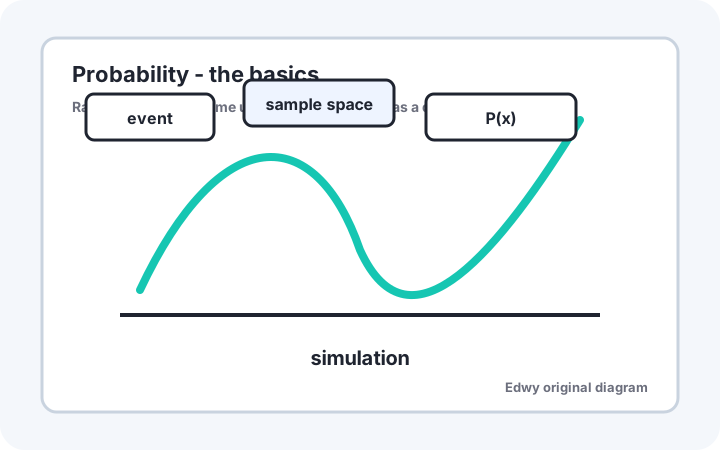
Random events become usable when modeled as a distribution. Key motion beats: event, sample space, P(x), simulation.
Probability basics check
0 of 1 questions completed locally.
Source slide 5