Statistics · Module 7
Estimation, sampling, and bias
Estimation
Using a sample of data to guess a property of the whole population. "What is the average customer spend?" answered with 500 receipts.
Sampling
How you select data shapes everything that follows. Bad samples give confident but wrong answers.
Variance + bias
Variance: how much your estimate jiggles. Bias: how systematically wrong it is. Every model trades one against the other.
central-limit intuition
Averages of many independent measurements tend to become more stable than the individual measurements.
Generalisation
Whether a finding on past data still holds on tomorrow’s data. Most AI failures are generalisation failures.
Applied frame
Ask what population the sample represents, what uncertainty remains, and how the estimate could drift.
Diagram cue
The diagram shows samples becoming estimates, with bias and variance kept visible.
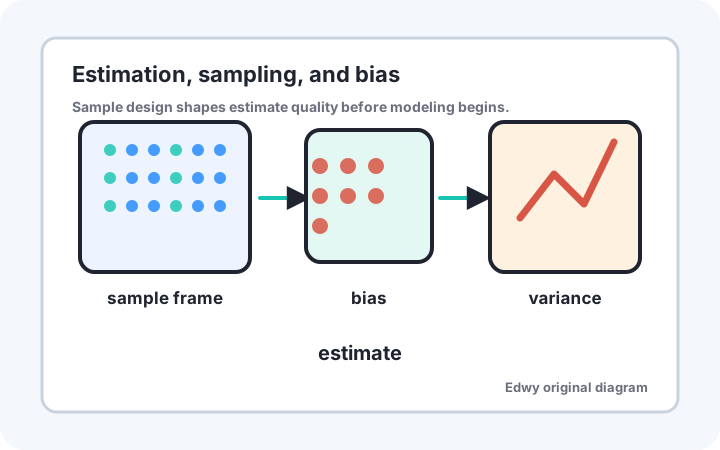
Sample design shapes estimate quality before modeling begins. Key motion beats: sample frame, bias, variance, estimate.
Estimation check
0 of 1 questions completed locally.
Source slide 8